
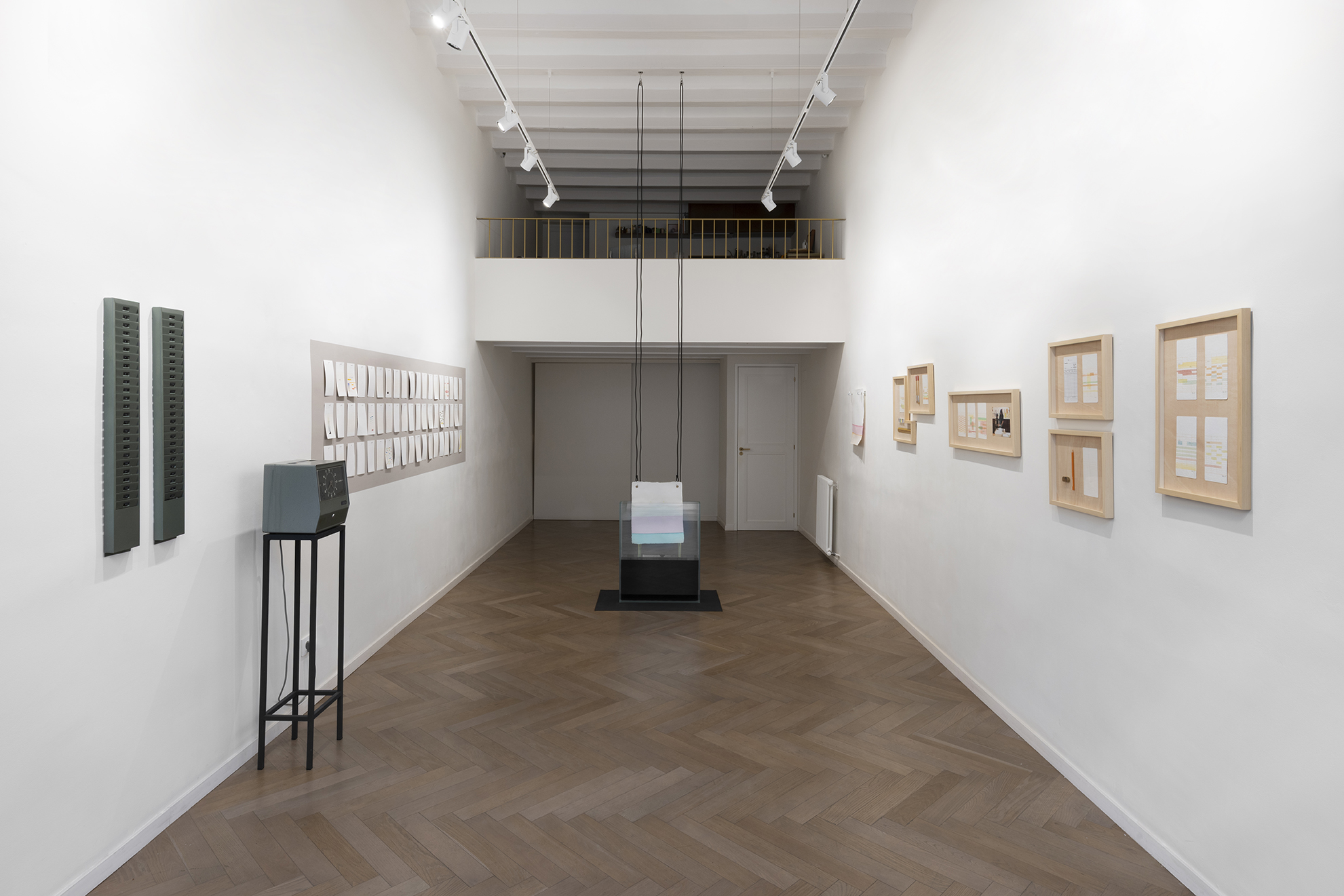
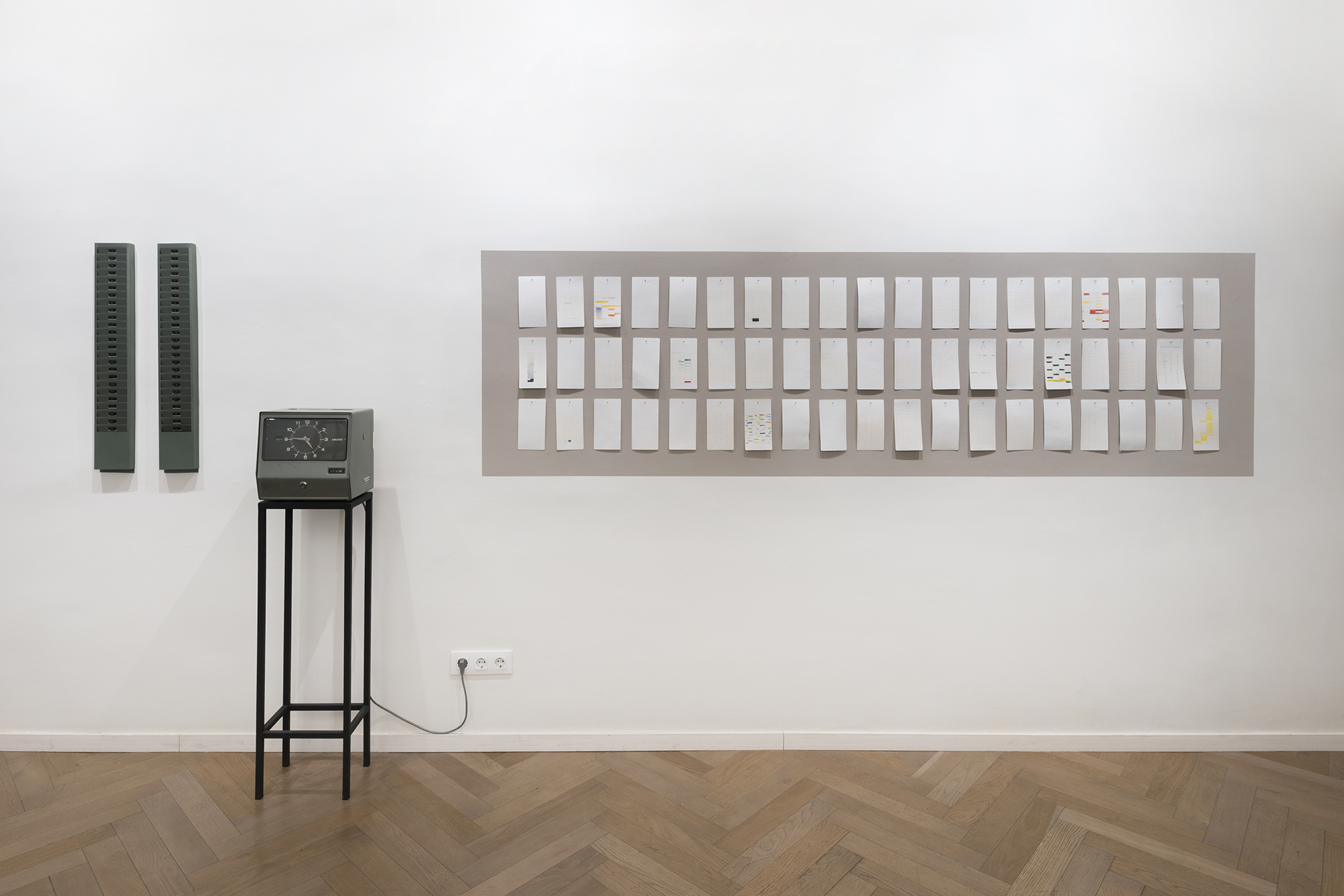
Detalle general de la exposición. La máquina del tiempo. Chiquita Room. 2026
General detail of the exhibition. The time machine. Chiquita Room. 2026
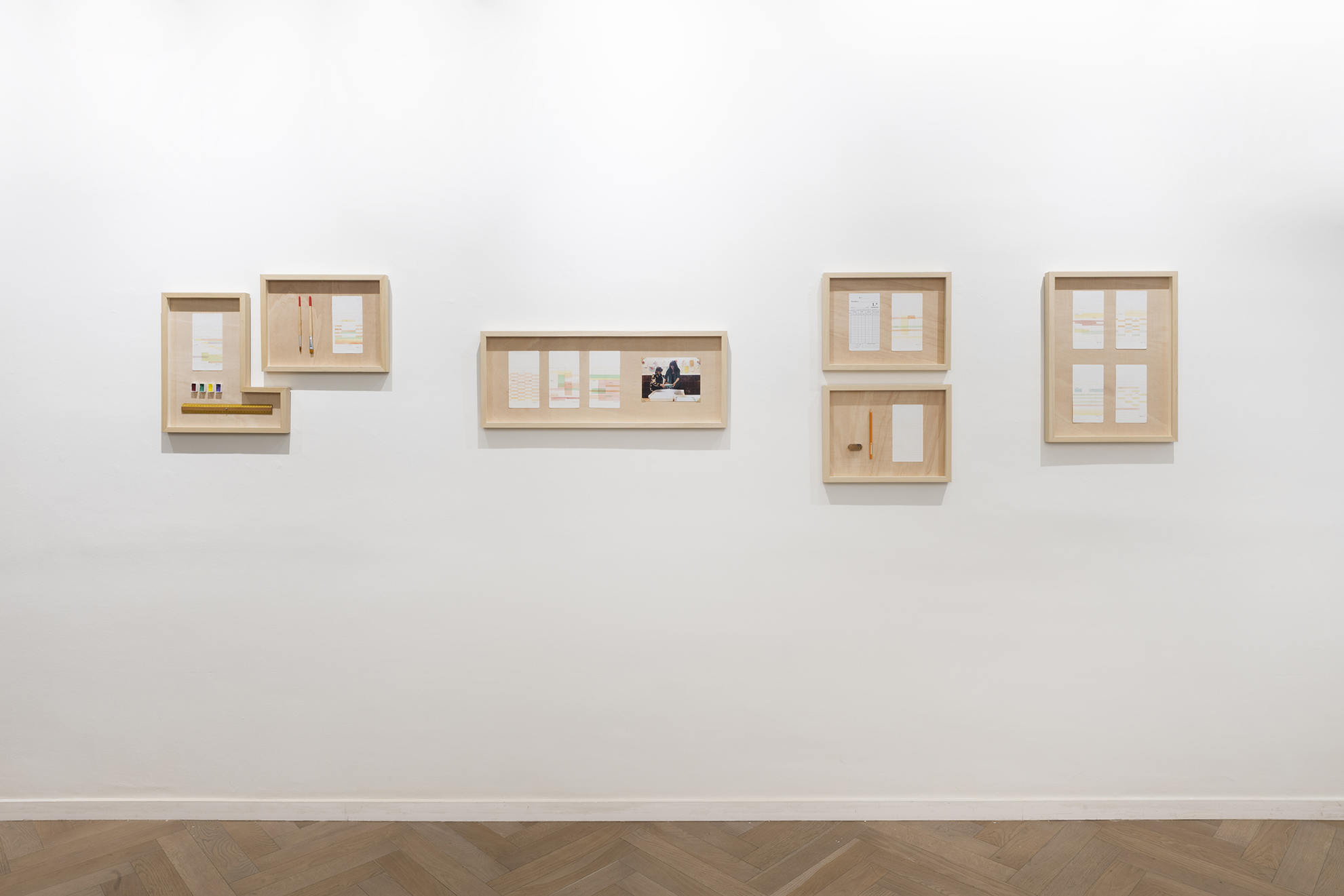
Detalle de la exposición. La máquina del tiempo. Chiquita Room. 2026
Detail of the exhibition. The time machine. Chiquita Room. 2026
SEGÚN CONVENIO O SEGÚN CONVENGA
Hace muy poco que he empezado a trabajar como asalariada por primera vez en mi vida, aunque tengo cotizados 11 años, 2 meses y 7 días en la Seguridad Social. Además de la paz mental que genera saber que muy mal se tiene que dar la cosa para que el 27 del mes no reciba en mi cuenta bancaria el ingreso periódico, la mayor diferencia que siento entre el trabajo autónomo y asalariado es la concepción del tiempo. Me está costando medir mi productividad en horas. No sé si voy demasiado lenta o demasiado rápida. Algo me debe de agobiar este tema, porque hace unas noches soñé que era un día lleno de actividad: tenía que hacer cosas de otros trabajos –porque autónoma se nace–, una amiga me llamaba para ir al gimnasio, luego el aperitivo y así iba pasando el día, oscurecía y a mí aún me quedaban 6 horas que rendir como asalariada. Hasta ahora no había medido el tiempo de trabajo, funcionaba solo por tareas completadas. Aquellas labores secundarias necesarias para hacer mi trabajo eran siempre horas extra no remuneradas. Antes, averiguar cómo configurar el correo o descargar una actualización del ordenador era tiempo (vamos, dinero) perdido, necesitaba que fuese más rápido. Nadie me pagaba ese ratito, solo me pagaban por trabajo acabado, definitivo y perfecto. Todo lo demás, a mi cuenta.
El trabajo de las y los artistas es autónomo. Claro que existió la figura del pintor de corte y se dice que en los noventa había galerías que tenían a los artistas a sueldo, pero ahora todo eso suena a mito fundacional y ahí fijo que artistas con pronombre femenino había pocas. De la consciencia del tiempo empleado en el trabajo artístico surge La máquina del tiempo de Lara Ruiz, un dispositivo para el registro del proceso creativo, eso que ocurre desde la fase de observación-ideación hasta la de acción-producción. Una obra que registra para mostrar precisamente que no es tan fácil medir la labor artística. La base de este dispositivo es una máquina de fichar setentera a la que Lara Ruiz le ha dado el cambiazo. En lugar de las tarjetas perforadas originales, lo que la máquina ficha ahora son réplicas en acuarela sobre papel. Cada una de estas nuevas tarjetas ha sido realizada en una sesión de trabajo, a través de un sencillo acto que tiene algo de ritual para honrar su propio tiempo creativo, y señalar su espontaneidad y singularidad. Lara Ruiz ha estado fichando en su trabajo de estudio y ahora que se hace público quizá nos haga fichar a muchas otras implicadas en la puesta en común de su obra: montador, enmarcadora, diseñadora gráfica, impresor o incluso a visitantes. (…)
Un texto de Manuela Pedrón
Leer texto completo aquí.
WORKING HOURS OR HOURS WORKING
I very recently started working a 9-to-5 job for the first time in my life, even though I’ve worked for 11 years, 2 months and 7 days according to the government’s figures. Apart from the peace of mind you get from knowing that things would really have to take a turn for the worse for me not to see that regular payment in my bank account on the 27th of the month, the greatest difference I’ve noticed between freelance work and a salary job is the notion of time. I’m finding it difficult to measure my productivity in hours. I don’t know if I’m working too fast or too slow. Something about all this must be nagging away at me because, a few nights ago, I had a dream about a really busy day: I had to do stuff from other jobs —because you never really stop freelancing— a friend called me to go to the gym together, then for a quick drink, and so the day went on, night fell and I still had to eke out my 6 hours on the clock. Up until now, I’d never measured the time I spent working, I operated on a task-by-task basis. Those secondary chores necessary to get my work done were just unpaid overtime. Back then, working out how to set up my emails or downloading an update for my computer was a waste of time (and, of course, money): I needed it to go faster. No one was paying me for those minutes; they only paid me for finished, definitive and perfect jobs. Everything else was on me.
The work of an artist is freelance. Of course, there used to be the figure of the court painter, and rumour has it that some galleries had artists in their pay back in the 90s, but that all sounds like a foundational myth now, and there were definitely very few artists who went by she/her among them. Lara Ruiz’s The Time Machine emerges out of an awareness of the time that goes into artistic labour, a device for registering the creative process, everything that occurs from the observation-envisioning stage up to the action-production stage. A piece that keeps a record to show precisely that it’s not that easy to measure artistic work. The basis for this device is a punch-clock system from the seventies that Lara Ruiz has given a make-over. In lieu of the original perforated cards, this machine now punches replicas of them made in watercolour on paper. Each of these new cards was made in a work session, through a simple act, which has a ritual element to it, to honour their own creative time and underscore their spontaneity and uniqueness. Lara Ruiz has been clocking in to her studio work, and now that it’s going on display, she might even get the other people involved in putting her work together to clock in too: the technician, picture framer, graphic designer, printer or even visitors. (…)
A text by Manuela Pedrón
Read the full text here
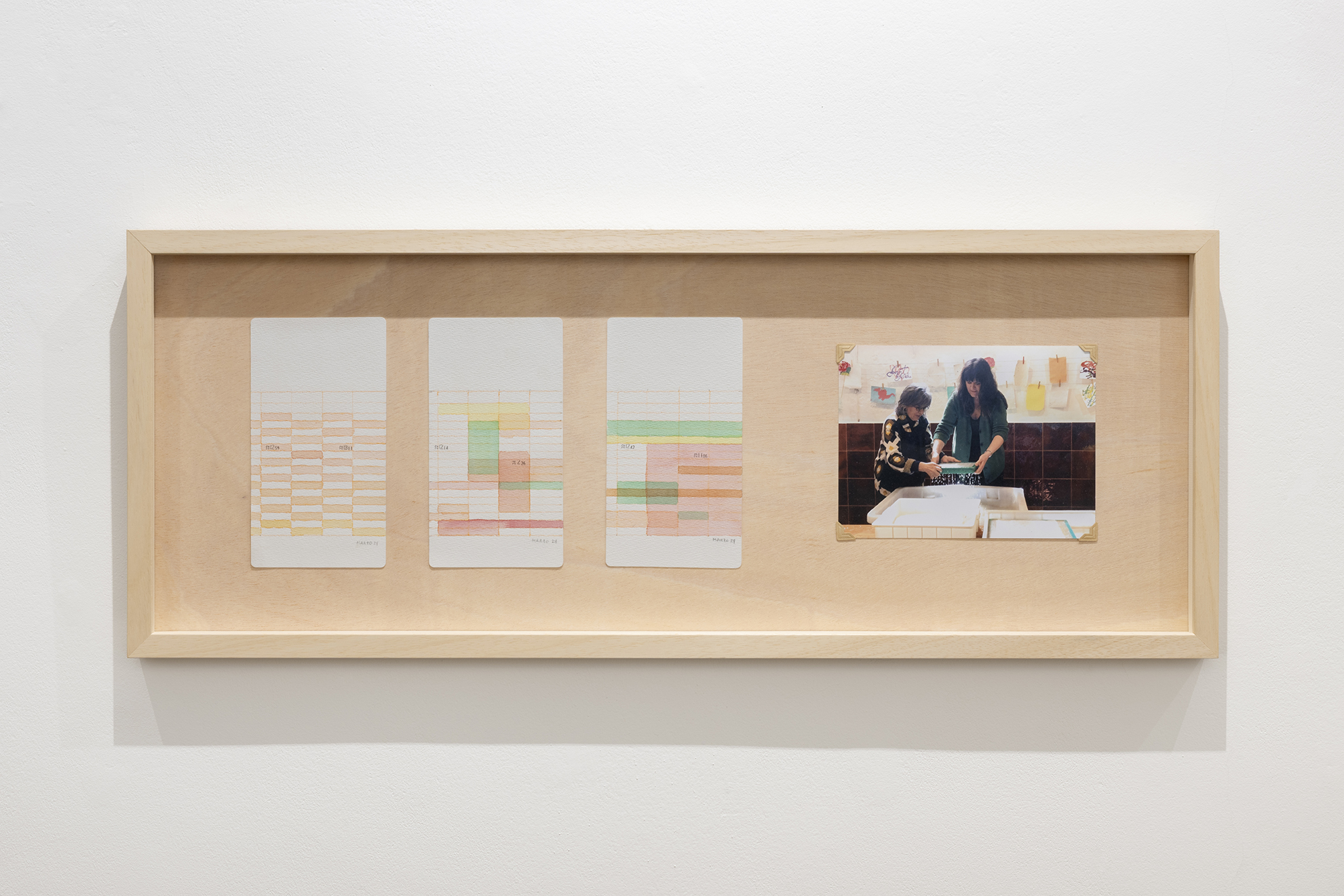
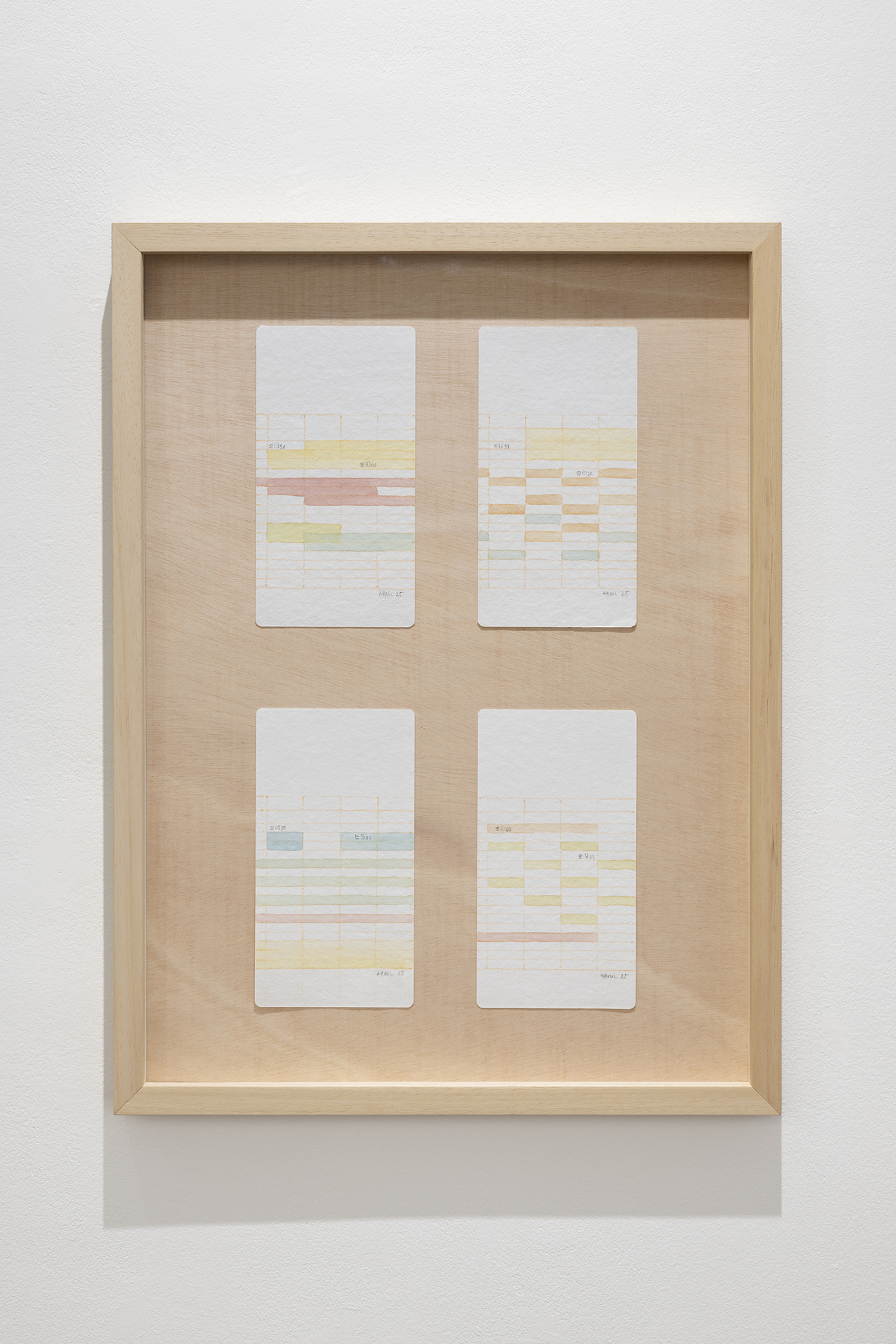
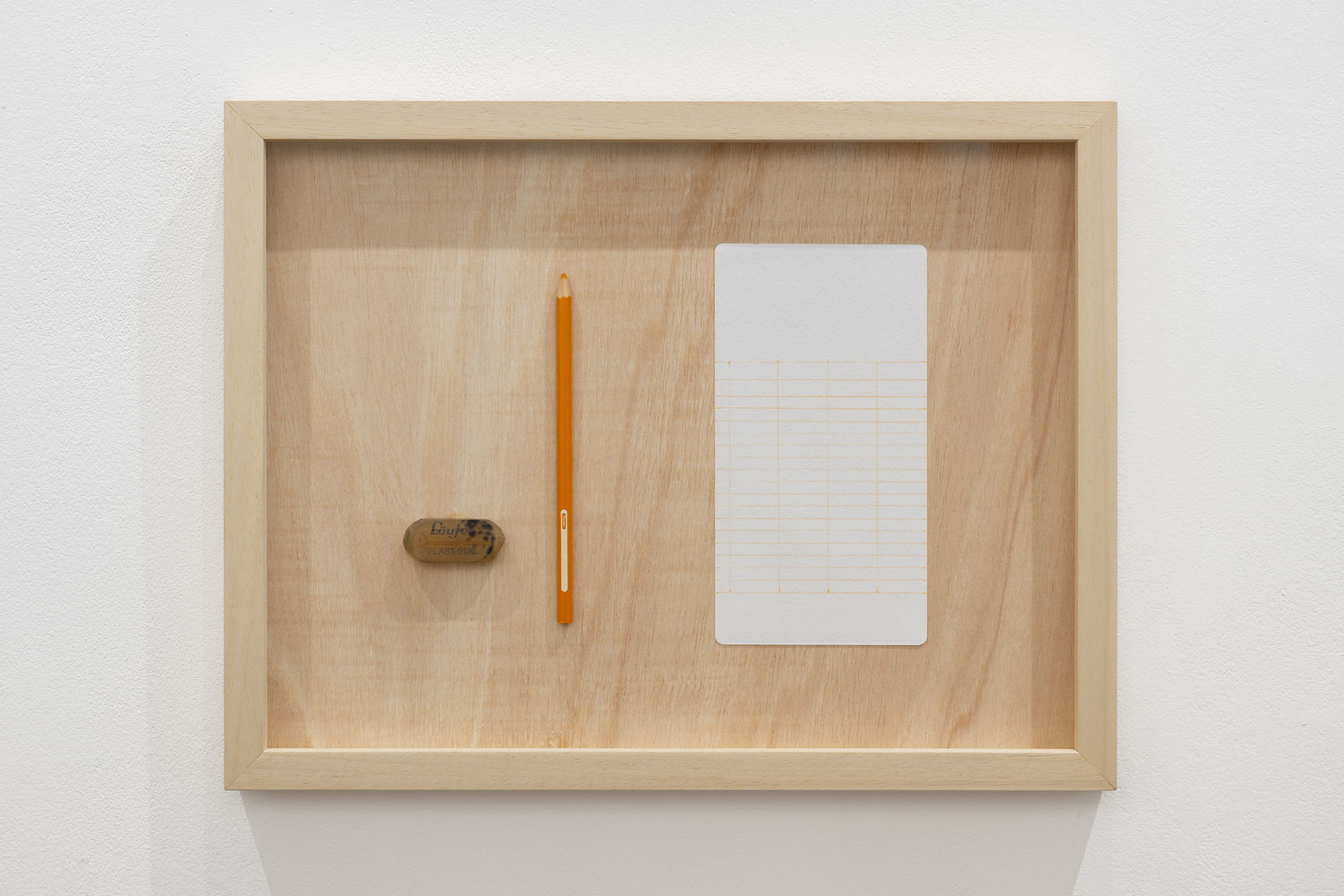
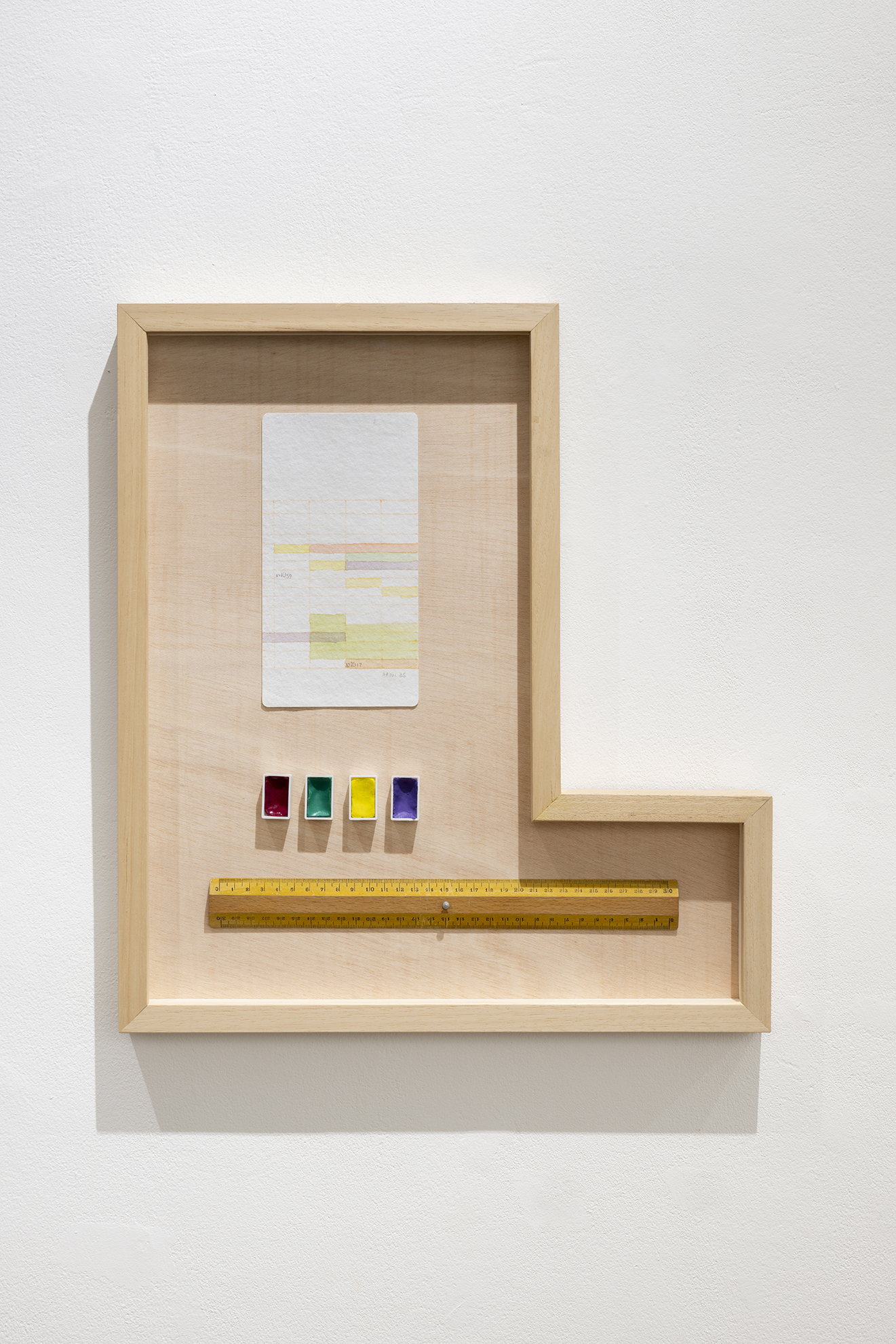
Detalle de la exposición. La máquina del tiempo. Chiquita Room. 2026
Detail of the exhibition. The time machine. Chiquita Room. 2026